

You Cannot Intellectualize Your Way Out of Feeling
Understanding is not the same as feeling.

The Instinct to Explain
The problem with having a high emotional and intellectual quotient isn’t simply that you understand people. It’s that your empathy, pattern recognition, and psychological reasoning become so deeply intertwined that your first instinct is no longer to feel. It’s to explain. Every action becomes a symptom. Every wound comes with a diagnosis. Every disappointment demands an explanation before it is allowed to become an emotion. Not because you believe people are always good. Not because you think no one ever intends to hurt you. But because your mind instinctively asks, “What made them this way?” long before it asks, “What did this do to me?”
Someone forgets your birthday after you spent weeks planning theirs. They have probably been overwhelmed. Work has consumed them. They’ve barely slept. Their mind has been surviving rather than remembering. Someone snaps at you over something insignificant. They’re probably carrying stress from somewhere else. You simply happened to be standing closest when everything spilled over. Someone you’ve spoken to every day suddenly becomes distant. They’re probably emotionally exhausted. Some people disappear when life becomes too heavy, even from the people they care about most. Someone criticizes your work much more harshly than everyone else’s. Maybe they see your potential and expect more. Maybe criticism is the only language they were ever taught. Someone never thanks you for everything you’ve quietly done for them. Perhaps they never realized how much emotional labor you’ve been carrying. Gratitude isn’t always absent. Sometimes awareness is. The person you’ve loved tells you they don’t feel the same way. It probably has nothing to do with your worth. Attraction isn’t earned. Sometimes two good people simply don’t arrive at the same feeling. and so on……
Even When They Meant to Hurt You
The habit doesn’t disappear when people’s intentions become obvious. In many ways, that’s when it becomes even stronger. Someone spreads rumors about you knowing they’re false. They’re probably deeply insecure, and tearing someone else down is easier than confronting themselves. Someone intentionally excludes you from a gathering that everyone else was invited to. Perhaps your presence threatens something in them they haven’t learned to face. Someone constantly competes with you and secretly celebrates when you fail. Maybe your success has become evidence of everything they believe they are not. Someone refuses to apologize even after admitting they were wrong. Perhaps admitting fault threatens the identity they’ve spent years protecting. Someone betrays your trust by sharing something deeply personal. Maybe belonging to the group mattered more than being loyal to one person.
You don’t struggle to recognize manipulation. You know when someone is jealous. You know when someone is projecting. You know when they intended to wound you. Your mind just refuses to believe that hatred exists in isolation. It keeps tracing every cruel action back to fear, shame, loneliness, grief, insecurity, comparison, wounded pride, or years of unresolved pain. Sometimes your explanations are completely accurate. Sometimes they aren’t. But by the time you’ve finished understanding the person who hurt you, you’ve already postponed understanding the hurt itself.
Everyone’s Defense Lawyer
That is the strange gift of seeing the world this way. You rarely take things personally. You forgive more easily than most people. You become the person everyone confides in because you never reduce them to the worst thing they’ve ever done. You see frightened children hidden inside complicated adults. You see history where others see decisions. You see context where others see character. Your compassion runs so deep that it almost feels impossible to hate anyone for very long.
But gifts have shadows. Somewhere along the way, your empathy quietly changes jobs. It stops helping you understand people and starts helping you avoid yourself. You become everyone’s defense lawyer except your own. Before anger has the chance to speak, your intellect interrupts. Before disappointment settles, your mind has already begun constructing a narrative that makes it easier to bear. You begin mistaking explanation for healing because they feel remarkably similar. After all, once something makes sense, it feels as though it shouldn’t hurt anymore. But understanding another person’s pain does not erase the impact they had on yours. And without realizing it, you’ve already taken the first step toward intellectualizing your own emotions.

When Understanding Turns Inward
Eventually, this way of thinking stops being something you reserve for other people. It quietly becomes the way you respond to yourself. Every emotion you experience is immediately met with an explanation. Every disappointment becomes a lesson before it’s allowed to become a feeling. You don’t just analyze the people around you anymore. You begin analyzing your own heart with the same relentless curiosity. Somewhere along the way, you convince yourself that if you understand an emotion well enough, you’ve dealt with it. That insight is the same as healing. That awareness is the same as acceptance. But understanding an emotion is not the same as experiencing it. You don’t suppress your emotions. You out-reason them.
You fail an exam you spent months preparing for. “Maybe I wasn’t ready yet. Maybe i needed to work harder. Maybe this happened because I needed to learn discipline.” You lose a competition you cared deeply about. “The winner had been preparing for much longer than I have. Maybe they are much more skilled than I am and deserved it more. This was always the statistically likely outcome.” Someone you love dies. “They were suffering. Maybe this is kinder than watching them decline for another year.” You miss an opportunity you’ve dreamed about for years. “Everything happens for a reason. There will be better opportunities.” Every disappointment is immediately transformed into perspective. Every loss is reframed into wisdom. Before you’ve even touched the emotion, you’ve already begun explaining why it happenedd.
The same thing happens with love. You meet someone who makes your heart race, and before you’ve allowed yourself to enjoy the feeling, your mind has already begun calculating the ending. They’re spontaneous. I’m methodical. They don’t enjoy the things I do. We would never be compatible in the long run. You convince yourself that eliminating hope is the same as protecting your heart. Even when you wake up missing someone you’ve already accepted wasn’t right for you, you don’t allow yourself to simply miss them. I’m not grieving them, you tell yourself. I’m grieving the future I imagined. You reduce longing to psychology, attraction to attachment theory, and heartbreak to cognitive patterns. Somehow it feels easier to dissect your emotions than to sit beside them.
Fear receives the same treatment. You hesitate before applying for your dream university, internship, or job. Instead of admitting that you’re scared, you begin constructing theories. I’m not afraid of rejection. I’m afraid of certainty. If I never try, I can always believe I might have been good enough. You feel envy when someone else succeeds, but before envy has a chance to become uncomfortable, you soften it with context. They had better opportunities. They started earlier. They had connections I didn’t. You feel guilt after snapping at someone you love, and instead of simply acknowledging that you’ve hurt them, you begin explaining emotional memory, childhood experiences, and learned behavior. Your explanations are thoughtful. They are often correct. But correctness has quietly become a substitute for feeling.
The Illusion of Emotional Intelligence
Perhaps the most subtle consequence of this habit is that it changes the way you judge your own emotions. Somewhere along the way, you begin to believe that continuing to feel something after you’ve already explained it is a failure of intelligence. As though wisdom should make grief shorter, joy contained, heartbreak quieter, anger smaller, and disappointment easier to bear. You tell yourself; I already know why this happened. Why am I still upset? Every tear starts to feel irrational. Every moment of longing feels immature. Every giggle of joy feels stupid, everything that you find exciting makes you wonder if it’s cringe or corny. Every wave of anger feels like evidence that you’ve somehow failed to rise above it.
You begin to admire emotional detachment because it looks like wisdom. The people who seem unaffected appear stronger, calmer, more evolved. You start believing that truly intelligent people don’t stay angry, don’t cry over people they’ve already understood, don’t grieve losses they’ve already accepted intellectually. So whenever your own emotions return, they make you feel strangely inferior, as though your heart is lagging behind your mind. You become embarrassed by your own humanity. But perhaps wisdom was never about feeling less. Perhaps it was about recognizing that understanding an emotion does not exempt you from experiencing it. The mind may arrive at acceptance in a day. The body often takes much longer. Neither is weaker than the other. They are simply speaking different languages.
Understanding Is Not Processing
This is the illusion at the center of it all. You mistake explanation for embodiment. You assume that because you’ve identified the cause of an emotion, you’ve somehow completed the emotion itself. But emotions don’t disappear because they’ve been explained. They disappear because they’ve been lived. Understanding is not processing. Reasoning is not release. Explanation is not embodiment. Your mind may have reached the destination, but your body is still somewhere along the journey, patiently waiting for you to acknowledge what it has been carrying all along.
Your explanations are rarely wrong. People really are overwhelmed. They really do project their insecurities onto others. They really are shaped by childhood, grief, shame, fear, loneliness, comparison, and unmet needs. Your reasoning isn’t the problem. The timing is. You explain before you feel. You search for meaning before you’ve allowed yourself to experience the loss. You rush to make peace with your emotions before you’ve even admitted that they hurt. Understanding is a beautiful thing, but only after your emotions have been acknowledged. Otherwise, it becomes one of the most sophisticated ways of avoiding them.
How Resentment Is Born
This is how resentment is built. Not through one devastating betrayal, but through hundreds of tiny moments where understanding replaced acknowledgment. Someone crosses a boundary, and you tell yourself they didn’t mean it. Someone disappoints you, and you decide they’re having a difficult week. Someone says something hurtful, and you convince yourself they’re projecting. Someone forgets you, and you assume they’re overwhelmed. You never ask for an apology because you already understand why they behaved that way. You never say, “That hurt me,” because you’ve already explained why it happened. Every explanation becomes another reason to stay silent. Every silence becomes another emotion that has nowhere to go.
For a long time, you mistake that silence for maturity. You think letting things go is the same as healing. You tell yourself that confronting people is unnecessary because you already understand them. But understanding someone else’s pain does not erase your own. Compassion does not require self-abandonment. Empathy is not measured by how much hurt you’re willing to quietly absorb. Eventually, the emotions you never acknowledged begin collecting interest. The resentment you believed you had risen above returns months later in places that make no sense. You find yourself disproportionately angry over something trivial. You feel unexpectedly bitter toward someone who hasn’t done anything recently. You wake up carrying the weight of emotions you thought you’d already processed. They were never gone. They were simply waiting for their turn to be felt.
When Pain Has No One to Blame
But this isn’t only true of people. Some of the deepest wounds in life have no villain attached to them. No one betrayed you. No one lied to you. No one owes you an apology. Someone dies. You lose a competition. You don’t get into the university you dreamed of. You fail an exam you spent months preparing for. A relationship ends because life pulled two people in different directions. A dream quietly dissolves after years of effort. There is no one to confront and no one to forgive. Yet your mind responds in exactly the same way. Maybe I wasn’t ready. Maybe this happened because life has something better planned. Maybe this failure is preparing me for something greater. Everything happens for a reason. Before you’ve even touched the disappointment, you’ve already begun searching for meaning. You soften the fall before you’ve even hit the ground.
Perspective is comforting, but timing matters. There is nothing wrong with finding meaning in loss. There is nothing wrong with believing that pain can teach us something. The problem begins when wisdom becomes a substitute for grief. When every disappointment immediately becomes a lesson. When every ending is rushed into acceptance. When every failure is reframed before you’ve allowed yourself to admit that it hurts. Sometimes the healthiest response isn’t optimism. Sometimes it isn’t resilience. Sometimes it is simply sadness. Sometimes the most honest sentence you can say is, “This mattered to me, and losing it hurts.” Not because life is unfair, and not because someone is to blame, but because you cared. Meaning should arrive after mourning, not instead of it.
Even Joy Gets Muted
Perhaps the saddest consequence of living this way is that it doesn’t only numb painful emotions. It quietly reaches the beautiful ones too. You stop yourself from becoming too excited because you’re already preparing for the possibility of disappointment. You hesitate to celebrate your achievements because someone else probably worked harder. You struggle to fully enjoy a new relationship because you’re already calculating whether the two of you are compatible five years from now. You receive good news, and before happiness has the chance to settle, your mind begins asking how long it will last. Every joyful moment is interrupted by analysis before it has the opportunity to become a memory.
You begin observing your life instead of participating in it. Even happiness becomes something you stand outside of, quietly explaining to yourself. You catch yourself laughing, only to wonder why you’re laughing. You fall in love, only to start predicting how it might end. You achieve something you’ve wanted for years, only to immediately begin worrying about what’s next. Your mind becomes so accustomed to understanding experiences that it forgets how to simply have them. It is difficult to be fully present when every emotion is immediately translated into a theory. Eventually, you realize that intellectualizing doesn’t just reduce the intensity of pain. It also dulls the intensity of wonder.
Survival Strategies Have an Expiry Date
Perhaps this habit didn’t appear out of nowhere. Maybe intellectualizing your emotions was never simply a personality trait. Maybe it was a survival strategy. If you grew up in an environment where expressing anger was considered disrespectful, where crying was dismissed as weakness, where excitement was met with indifference, or where sadness was treated like an inconvenience, then learning to explain your feelings instead of expressing them made perfect sense. Reasoning became safer than reacting. Analysis became safer than vulnerability. Understanding became safer than honesty. Before showing an emotion, you first had to make it reasonable. Before admitting you were hurt, you had to prove to yourself that you deserved to be. Somewhere along the way, your emotions stopped being experiences and became arguments that needed evidence before they were allowed to exist.
And perhaps that strategy protected you once. It helped you navigate difficult environments. It taught you patience, empathy, and self-control. But survival strategies have an expiry date. What once kept you safe can quietly become the very thing that keeps you disconnected from yourself. The habits that protect us as children often imprison us as adults if we never question whether we
still need them. There comes a point where constantly understanding everyone else begins to cost more than it gives. There comes a point where compassion without boundaries slowly turns into self-abandonment.
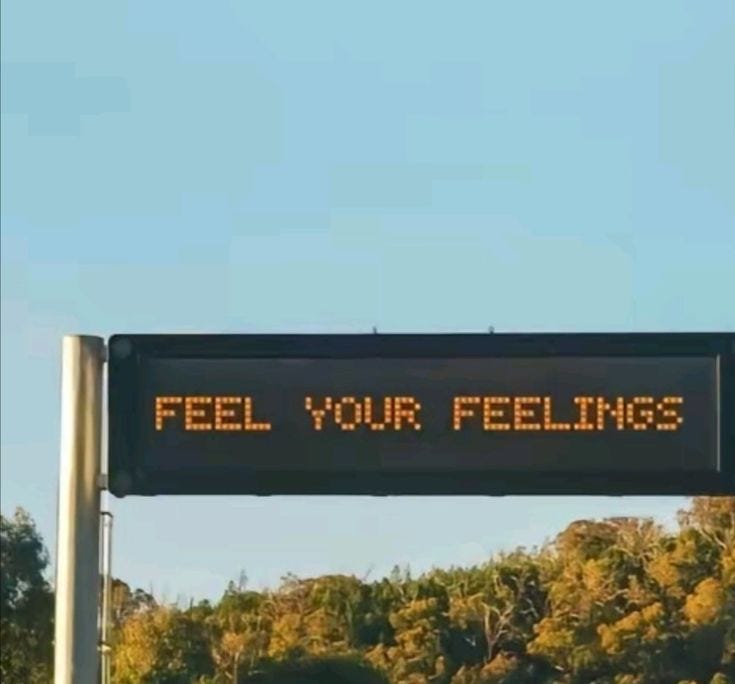
Feel First, Understand Later
Perhaps that is the balance we spend our lives trying to learn. Not to stop understanding people, but to stop using understanding as a substitute for feeling. Understanding someone’s pain does not erase the impact they had on yours. Forgiveness does not require the absence of anger. Compassion does not require the absence of boundaries. You can know exactly why someone behaved the way they did and still admit that what they did hurt you. Those truths are not contradictory. They simply belong to different people. Their reasons belong to them. Your feelings belong to you.
Maybe healing was never about learning to feel less. Maybe it was about giving yourself permission to feel completely before asking your mind to make sense of it. Feel the anger before searching for the insecurity that caused it. Feel the grief before looking for meaning in the loss. Feel the disappointment before turning it into a lesson. Feel the joy before questioning whether you deserve it. Feel the excitement before tempering it with caution. Feel desire before reducing it to psychology. Laugh without immediately observing yourself laughing. Cry before convincing yourself there’s nothing to cry about. Mourn before searching for the silver lining. Celebrate before predicting how it might end. Your emotions do not become more valid once they have been rationalized. They were valid the moment you felt them.
Only after you’ve allowed yourself to fully experience them should you ask why they appeared, where they came from, what they reveal, and what they have to teach you. Explanation should follow emotion, not replace it. The heart was never asking to be corrected. It was asking to be heard. Perhaps that is what emotional maturity really is. Not feeling less. Not explaining faster. Not rising above your emotions. But trusting that you are capable of surviving them. Because no matter how much psychology you know, no matter how beautifully you can explain the human condition, and no matter how deeply you understand the people around you, there is one truth that remains unchanged.
You cannot intellectualize your way out of feeling.
A Note to you, the reader
Thank you for reading. 🤍
If this essay stayed with you in some way, I’d love to hear your thoughts. Feel free to leave a comment, share it with someone who might relate, or subscribe if you’d like to stay for more essays like this.
Until next time.
All rights reserved. All written content in this post belongs to the author.
All images used in this post are sourced from Pinterest and similar platforms, and all rights to those images belong entirely to their respective owners.
This is quite the unique piece of literature I have read in a while. Loved the approach. Keep cookin🔥🔥
I look forward for your essays so muchh. I love them, all of them